During the late 1890s and early 1900s, the Hopi-Tewa master potter Nampeyo of Hano entered a highly distinctive, experimental phase frequently referred to by scholars and collectors as her White Slip Period. Before fully committing to the unslipped, yellowware polychrome Sikyatki Revival style that defined her legacy, Nampeyo utilized a fine white clay slip as a canvas for her pottery. This brief but brilliant era represents a crucial evolutionary bridge in her career, blending ancestral Hopi aesthetics with innovative technical experimentation.
Showing all 12 results
-
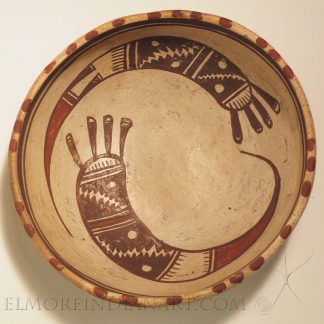
Hopi Polacca Bowl by Nampeyo, c. 1890
Price on Request -
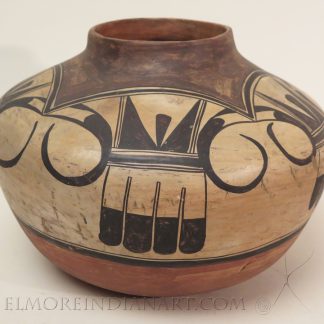
Large Hopi Storage Jar by Nampeyo with Eagle Tail Design, c.1900
Price on Request -
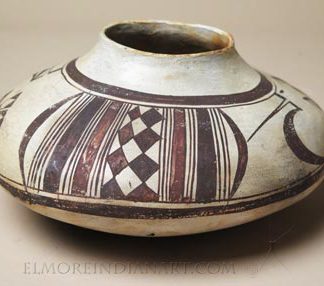
Large Polacca Jar by Nampeyo
$16,500.00 Add to cart -
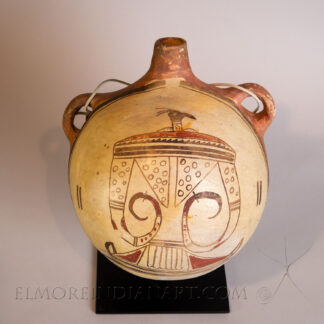
Large Hopi Polacca Canteen by Nampeyo, c. 1890
$8,850.00 Add to cart -
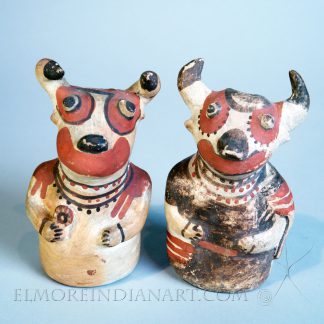
Pair of Wakas “Cow” Kachinas by Nampeyo, c.1885
$7,200.00 Add to cart -
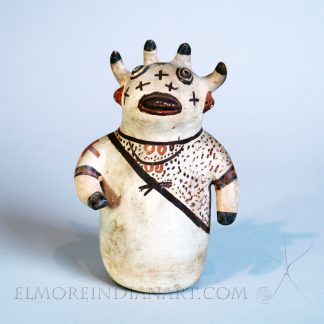
Hopi Polacca 4-Horned Kachina by Nampeyo, c. 1885
$7,200.00 Add to cart -
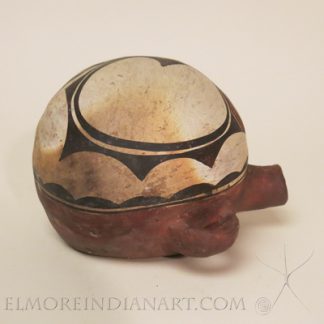
Hopi Polacca Canteen by Nampeyo, c.1880-1885
$6,850.00 Add to cart -
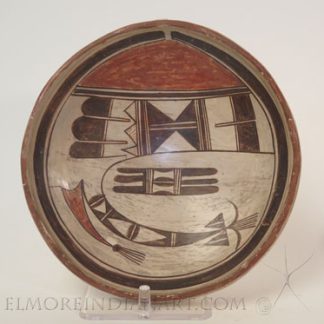
Early Nampeyo White Ware Open Bowl with Classic Swirl
$6,850.00 Add to cart -
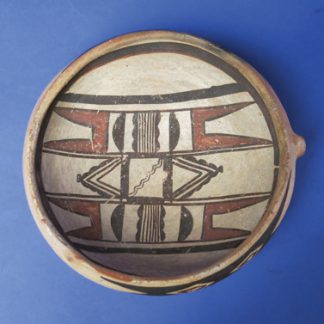
Polacca Bowl by Nampeyo, c.1895
$5,850.00 Add to cart -
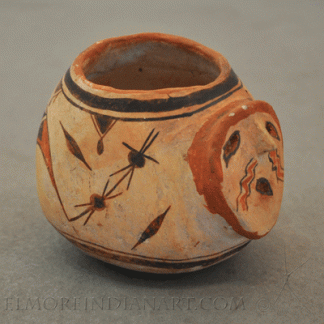
Polacca Effigy Jar by Nampeyo, c.1885
$3,800.00 Add to cart -
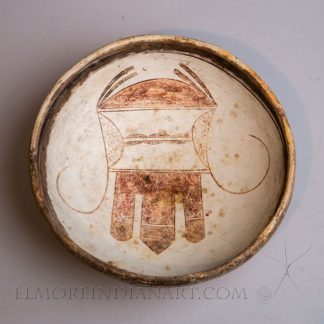
Polacca Polychrome Bowl by Nampeyo, c. 1890
$3,500.00 Add to cart -
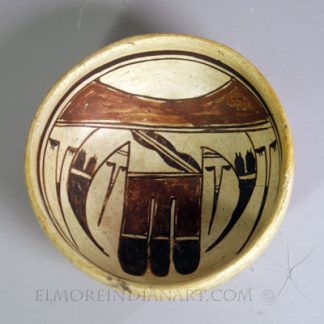
White-slipped Bowl by Nampeyo, c.1895
$2,150.00 Add to cart
Showing all 12 results